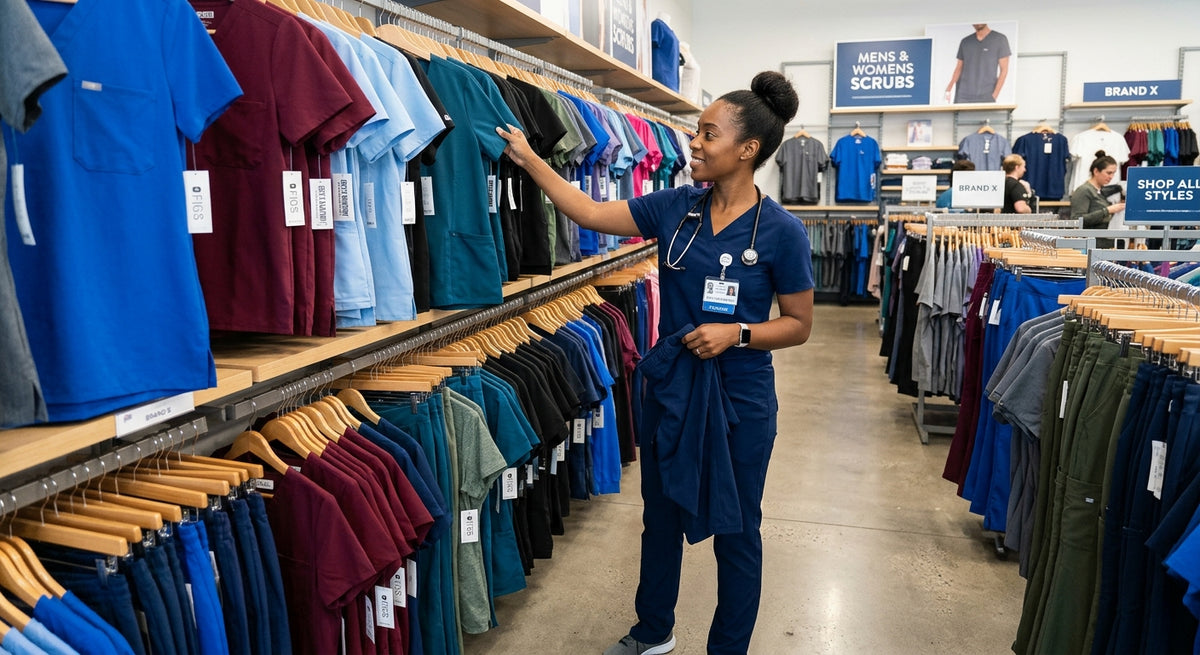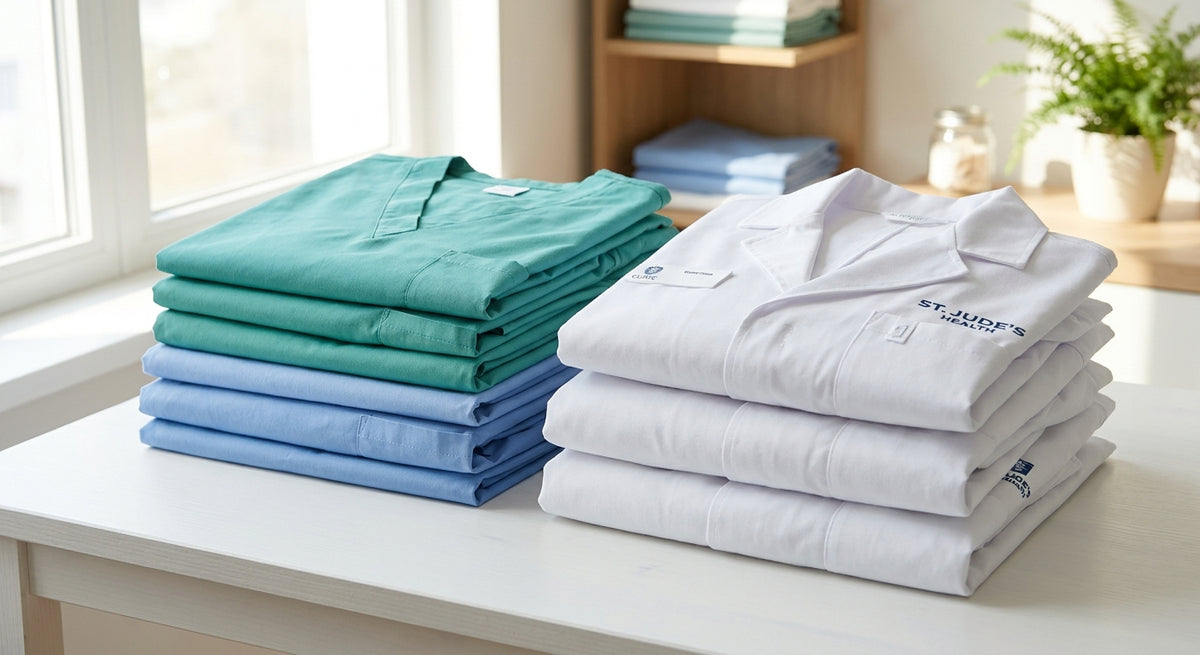
Outfitting an entire clinical staff, dental office, or medspa is a significant financial investment. Purchasing wholesale medical apparel allows practice managers and healthcare administrators to maintain a unified, professional appearance while controlling operational overhead. However, the true value of ordering wholesale scrubs and bulk uniforms is realized only when those garments maintain their structural integrity, rich color, and fluid resistance over dozens of wash cycles. Rigorous hospital shifts expose medical garments to bodily fluids, harsh disinfectants, and abrasive mechanical wear. Without an intentional, protocol-driven laundering strategy, premium fabrics can quickly fade, shrink, pill, or lose their antimicrobial properties. Implementing structured garment care routines ensures your medical apparel remains comfortable and compliant shift after shift.
Essential Pre-Treatment Protocols to Preserve Wholesale Uniforms
The laundering process begins long before uniforms enter the washing machine drum. In fast-paced healthcare environments, stains from blood, iodine, chemical peels, and medication are inevitable. If left to dry and oxidize into woven fibers, these contaminants can permanently discolor fabrics or weaken the textile substrate. For facility managers coordinating laundry workflows or individual providers managing their personal rotation of bulk scrubs, establishing a consistent pre-wash sorting and spot-treatment protocol is the most effective step in prolonging garment life.
- Perform Immediate Cold-Water Flushes: Biological stains containing proteins must always be treated with cold water first, as hot water immediately denatures and sets proteins permanently into synthetic and cotton fibers alike.
- Turn Garments Inside Out Prior to Laundering: Inverting tops and trousers protects outer surface weaves from abrasive friction against zippers, snaps, and machine drums, while preserving custom practice embroidery and screen printing.
- Sort Strictly by Color Saturation and Fabric Weight: Wash deep jewel tones, blacks, and navy fabrics completely separately from whites, pastels, and heavy outerwear to eliminate dye migration and surface lint accumulation.
- Apply Targeted Enzyme Pre-Treatments: Utilize pH-neutral, enzymatic liquid cleaners directly on collars, underarms, and visible clinical spills ten to fifteen minutes before starting the wash cycle.
Step-by-Step Laundering for Maximum Longevity and Sanitization
Balancing pathogen elimination with fabric preservation is one of the most common challenges in medical facility maintenance. High water temperatures and industrial-strength chemicals may sanitize garments, but they also accelerate elastic fatigue, break down moisture-wicking finishes, and cause premature seam failure across wholesale lab coats and scrub pants. Follow this calibrated washing procedure to achieve clinical sanitization without destroying fabric performance.
- Select a Mild, Bleach-Free Detergent: Use commercial detergents formulated without optical brighteners, chlorine bleach, or heavy fragrances, as these additives degrade elastane and weaken polyester-spandex blended weaves over time.
- Wash on Warm or Cool Cycles: Modern commercial detergents are formulated to activate thoroughly in cool or warm water (80°F to 105°F), providing effective sanitization without subjecting stretch fabrics to thermal shock and shrinkage.
- Skip Fabric Softeners and Dryer Sheets: Liquid fabric softeners deposit a hydrophobic silicone coating over textiles, which directly clogs the micropores responsible for moisture-wicking and breathability in high-performance wholesale uniforms.
- Tumble Dry on Low Heat or Air-Dry: Remove garments promptly while slightly damp to prevent stubborn wrinkling, and dry on the lowest possible heat setting to protect technical stretch fibers from dry-rot and heat degradation.
Fabric Investment Care: Selecting and Maintaining Premium Cuts
Protecting your practice investment also depends on the baseline quality of the textiles you source. High-grade fabrics resist fading, retain seam tension, and withstand repeated clinical laundering far better than lower-tier commodity options. When equipping female healthcare staff, selecting durable, ergonomically designed women's scrubs constructed from four-way stretch blends ensures that regular cleaning does not compromise shape or flexibility. Similarly, standardizing team apparel with resilient, breathable men's scrubs guarantees consistent color retention and moisture management across every department. Outer clinical layers require dedicated attention as well; professional lab coats should be washed with gentle agitation and hung promptly to preserve their structured lapels, reinforced pockets, and liquid-barrier finishes. Adhering to these maintenance steps when managing wholesale lab coats and everyday medical apparel minimizes annual replacement expenses while keeping your staff looking impeccably professional.
Ready to upgrade your clinic or medspa with durable, high-performance apparel built to last? Partner with Zenir Wholesale to outfit your entire team with premium wholesale scrubs, outerwear, and bulk uniforms engineered for comfort, style, and long-term durability.