Managing the procurement process for a busy clinic, hospital department, or surgical center requires striking an ongoing balance between fiscal responsibility and clinical presentation. When healthcare staff work twelve-hour shifts under demanding conditions, their apparel must deliver uncompromised flexibility, durability, and comfort. At the same time, practice administrators and procurement managers must protect tight operational margins. Purchasing wholesale uniforms directly from a reliable supplier eliminates retail markups, standardizes your facility's presentation, and simplifies replenishment cycles. By understanding the core mechanics of fabric specifications, tiered volume pricing, and sizing allocations, healthcare organizations can optimize their expenditure on wholesale medical apparel while equipping their frontline teams with premium garments designed to withstand rigorous commercial laundering.
Essential Quality Benchmarks for Wholesale Medical Apparel
Investing in bulk scrubs should never require compromising on textile performance or clinician comfort. When evaluating prospective garments, purchasing managers must look beyond unit costs and scrutinize the structural integrity of the fabric blends. Modern healthcare environments demand specialized synthetic-natural weaves, such as polyester, rayon, and spandex blends, which deliver four-way stretch and moisture-wicking properties without losing their shape over repeated washings. In contrast to low-grade economy cotton garments that fade, pill, and shrink, premium wholesale scrubs are engineered to endure high-temperature sanitation protocols while remaining soft against the skin during demanding shifts.
- Reinforced Seams and Stress Points: Look for double-needle stitching, flat-lock seams, and reinforced bar-tacking along pocket edges to prevent tears during active patient transfers and continuous movement.
- Fabric Composition and Recovery: Prioritize wrinkle-resistant polyester blends infused with rayon for breathability and spandex for dynamic flexibility, ensuring the fabric retains structural memory after industrial washing.
- Fluid Resistance and Soil-Release Finishes: Verify that garments feature protective barrier finishes that repel liquids, reduce cross-contamination risks, and release stubborn clinical stains effortlessly during standard laundering cycles.
- Ergonomic Pocket Architecture: Ensure scrub tops and cargo pants incorporate dedicated pen slots, deep patch pockets, and secure zippered compartments tailored for diagnostic tools, pagers, and mobile devices.
Strategic Blueprint for Ordering Bulk Uniforms
Transitioning from decentralized, ad-hoc retail purchasing to a structured bulk procurement system saves administrative hours and unlocks aggressive volume discounts. Implementing a reliable purchasing framework helps avoid backorders, accommodates staff turnover, and keeps the clinical team looking polished. Following a deliberate step-by-step approach ensures your medical practice secures the ideal balance of inventory and financial savings.
- Conduct a Departmental Uniform Audit: Map out department-specific needs across your organization, categorizing team members by role (e.g., triage nurses, physician assistants, surgical staff, and front-desk receptionists). Establish clear color-coding standards that facilitate rapid patient recognition and streamline internal inventory management.
- Calculate Standardized Size Curves: Avoid ordering equal distributions of sizes. Instead, analyze your staff demographic data to build an accurate size ratio—typically weighted toward medium and large sizes—while maintaining a modest buffer of small and extended sizes to accommodate onboarding and unexpected replacements without emergency orders.
- Consolidate Shipments to Maximize Tiered Pricing: Group your clinic's seasonal or annual requirements into scheduled quarterly orders rather than purchasing piecemeal. Establishing consolidated volume purchasing through Zenir Wholesale provides access to tiered bulk pricing, lower freight charges, and consistent batch dye lots across all team apparel.
- Establish Standardized Replacement Protocols: Set predictable garment lifecycles—typically providing three to five scrub sets per full-time clinical employee annually. This systematic cadence ensures your staff always wears pristine garments while keeping procurement forecasting clear and predictable.
Streamlining Clinical Outfitting with Zenir Wholesale
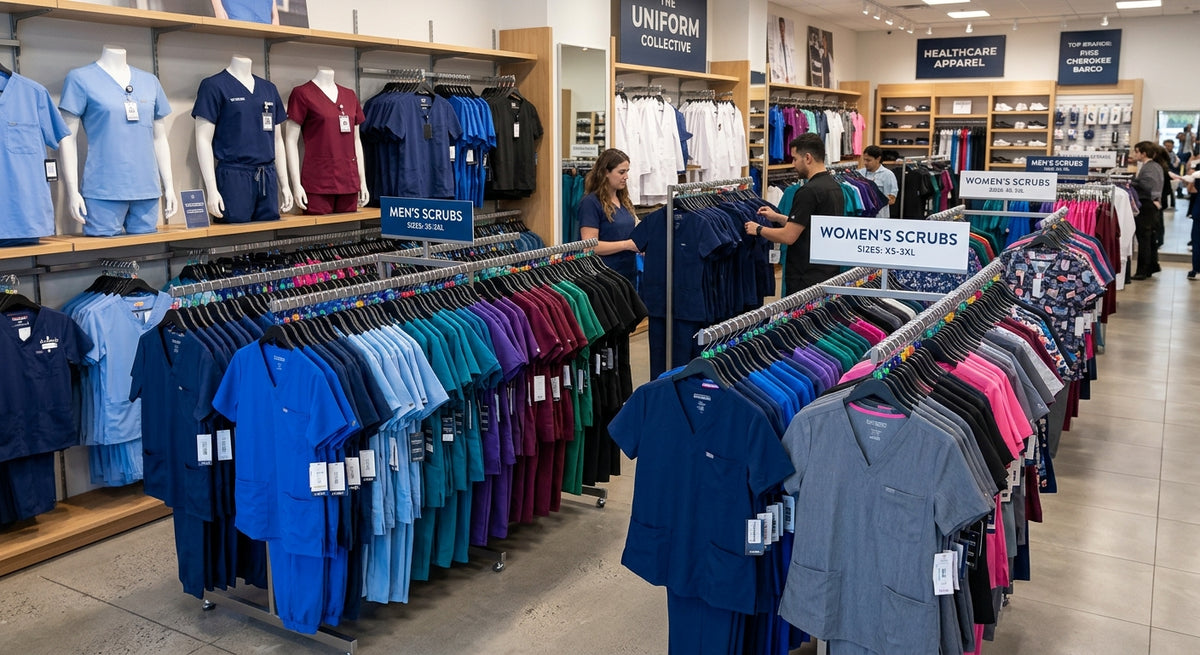
Building a cohesive professional image across clinical teams requires a unified catalog of high-performing apparel. When outfitting nursing and clinical support teams, providing thoughtfully designed women's scrubs ensures all-day mobility, modern silhouettes, and optimal pocket utility. Pairing these sets with coordinated men's scrubs maintains consistent team branding across your practice, providing tailored comfort and professional style for every team member. Furthermore, specialized diagnostic and leadership roles require polished outerwear that protects garments while inspiring patient confidence; outfitting your medical staff with structured lab coats ensures long-lasting spill protection, clean lines, and an authoritative presence across all outpatient and hospital settings.
Ready to upgrade your practice's medical apparel while cutting procurement costs? Partner with Zenir Wholesale to access our full collection of wholesale scrubs, durable wholesale lab coats, and custom bulk uniforms designed for medical, dental, and aesthetic clinics. Contact our corporate uniform specialists today to explore custom size samples and volume pricing for your medical facility.