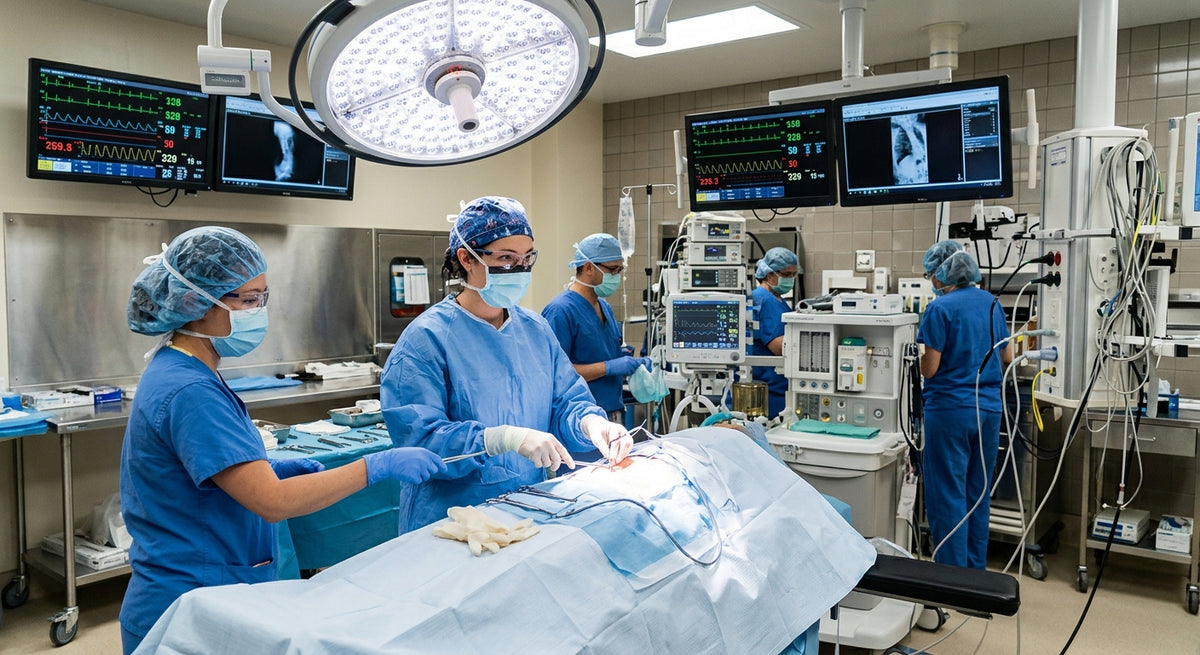
Operating rooms (OR) demand the most uncompromising infection control protocols in modern healthcare. For surgical centers, hospital procurement managers, and outpatient surgery clinics, outfitting clinical staff in premium wholesale surgical scrubs is not merely a question of uniform policy—it is a frontline defense against surgical site infections (SSIs) and bacterial contamination. Proper surgical attire serves as an indispensable physical barrier between sterile fields and healthcare personnel. When procurement directors source wholesale scrubs in high volumes, understanding the critical balance between sterile compliance, fabric integrity, and ergonomic endurance ensures that surgical teams remain protected, focused, and compliant through hours-long procedures.
Infection Control Standards and Fabric Requirements for Operating Room Attire
Surgical suites operate under strict mandates established by the Association of periOperative Registered Nurses (AORN) and OSHA. Operating room scrubs must meet heightened specifications compared to general hospital apparel because shed skin cells, respiratory droplets, and textile lint pose immediate contamination hazards during invasive interventions. Standard street clothes or poorly constructed medical garments shed particulates that can harbor microorganisms and settle into open incisions. High-performance wholesale medical apparel addresses this through tightly woven microfibers, moisture-wicking technology, and fluid-resistant coatings designed specifically for high-risk clinical environments. Selecting the right bulk scrubs requires careful evaluation of technical textile standards:
- Low-Linting and Particulate-Suppression Fabrics: High-density polyester-spandex and antimicrobial fabric blends dramatically limit fiber shedding and particulate dissemination inside sterile air zones.
- Fluid Barrier and Repellency Ratings: Premium operating room garments resist strike-through from blood, irrigation solutions, and biological fluids while remaining breathable under intense surgical lighting.
- Thermal Tolerance for Industrial Laundering: Sourced bulk uniforms must endure repetitive high-temperature wash cycles and chlorine-safe decontamination without suffering fiber breakdown or elastic degradation.
- Ergonomic Cut with Complete Coverage: Shirts must stay tucked into scrub pants securely, and sleeves and necklines must provide adequate coverage to prevent accidental shed contact with sterile drapes.
Facility-Supplied Bulk Uniforms vs. Personal Attire: A Practical OR Comparison
To eliminate variable microbial exposure, modern infection prevention standards strongly recommend facility-laundered uniforms rather than permitting staff to bring home-laundered garments into surgical suites. Providing centralized inventory simplifies compliance and gives department administrators direct authority over laundering sterility. When planning your departmental procurement cycle, follow these sequential steps to streamline surgical wardrobe logistics:
- Standardize Color Coding by Role: Establish clear visual hierarchy by issuing specific colors (such as ceil blue, surgical green, or deep navy) for scrub nurses, surgeons, circulating nurses, and surgical techs to simplify team recognition in high-stress procedures.
- Calculate Reserve Inventory Ratios: Order 3.5 to 4 complete sets per surgical staff member to absorb daily fluid-exposure changes, sterilization turnarounds, and fluctuating operative caseloads without supply shortages.
- Partner with a Dedicated Medical Wholesale Supplier: Contract directly with a trusted distributor like Zenir Wholesale to secure consistent dye lots, dependable volume sizing, and expedited restock intervals across every surgical department.
Equipping Surgical Specialists with Zenir Wholesale
Investing in reliable wholesale uniforms means outfitting your entire perioperative wing with attire that withstands demanding clinical workflows. Tailored fits play a critical role in reducing clinician fatigue while ensuring compliance with safety standards. Supplying operating personnel with fluid-repellent, mobility-focused women's scrubs ensures that surgeons and scrub techs maintain unhindered movement during complex surgical maneuvers. Similarly, stocking modern, functional men's scrubs gives surgical teams the structured breathability and all-day comfort required during back-to-back procedures. Outside the immediate sterile field, providing attending surgeons and clinical department directors with professional, fluid-resistant lab coats bridges the transition between pre-operative consultations, administrative rounds, and post-anesthesia recovery suites without compromising institutional hygiene standards.
Ready to upgrade your surgical department's inventory with compliant, high-performance apparel? Partner with Zenir Wholesale today to access top-tier wholesale lab coats, bulk surgical scrubs, and comprehensive medical uniforms engineered to protect your team and patients alike.